Yacht Rental vs Yacht Charter in Panama: What’s the Difference
When people start looking into getting out on the water in Panama, one of the first points of confusion is the difference between a yacht rental and a yacht charter. On the surface, they sound like the same thing. In practice, they can lead to very different experiences depending on what you expect, how involved you want to be, and the kind of day you’re trying to have.
In simple terms, a yacht rental usually refers to hiring a boat for a set period—often more transactional, sometimes without a full crew or added services. A yacht charter, on the other hand, is a more complete experience. It typically includes a captain, crew, planning, and a structured outing tailored to what you want to do on the water.
That distinction matters more in a place like Panama than people realize.
How It Actually Works on the Water
From my experience running charters here, most guests don’t just want a boat—they want the day to work smoothly without having to think through logistics. That’s where the difference becomes clear.
A rental can be as simple as: here’s the boat, here’s the time slot, enjoy. In some cases, especially in other countries, that might even mean bareboat rentals where you operate the vessel yourself. In Panama, regulations and safety standards usually require a licensed captain, so even rentals often come with one—but the level of service can still be minimal.
A charter, on the other hand, is built around the experience itself. Before you even step onboard, there’s planning involved—where you’re going, how long you’ll stay, what kind of route makes sense based on weather and tides, whether you want to stop at islands, snorkel, or just cruise.
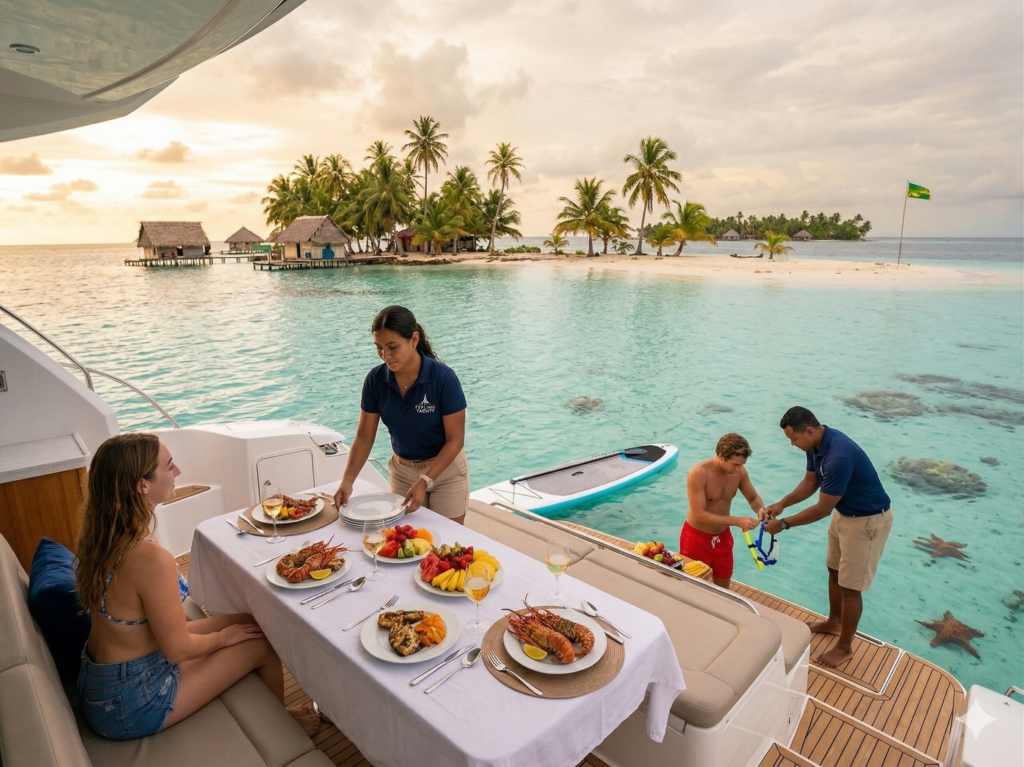
In most charters we operate in Panama, guests don’t have to worry about anything beyond showing up. The crew handles navigation, safety, anchoring, timing, and even small adjustments throughout the day based on conditions. That flexibility is something people don’t realize they need until they’re already out there.
The Types You’ll See in Panama
Panama isn’t a one-size-fits-all boating destination. You’ve got the Pacific side with spots like Taboga and the Pearl Islands, and the Caribbean side with completely different conditions in places like San Blas. The type of service you choose—rental or charter—affects how well you can actually experience those places.
With a rental, you’re usually limited to a fixed schedule and a basic route. It works fine if your plan is straightforward, like cruising near Panama City or anchoring for a few hours.
Charters open up more possibilities. For example, if you’re heading out toward the Pearl Islands, timing your departure and return around currents and wind makes a big difference in comfort. That’s not something most guests think about, but it’s something we adjust constantly in a charter setting.
A lot of people who book through our private yacht rentals in Panama page initially think they’re just getting a boat. What they’re actually getting is a coordinated outing that adapts to real conditions on the water.
Where People Get It Wrong
A common mistake we see is assuming the cheaper option—usually labeled as a “rental”—will deliver the same experience as a charter.
It doesn’t.
You might save upfront, but you lose flexibility. You lose guidance. You lose that layer of decision-making that keeps the day running smoothly.
For example, if the wind picks up in the afternoon (which happens often on the Pacific side), a charter crew will adjust the route, change anchoring spots, or shift timing so the ride stays comfortable. A basic rental setup might not offer that level of attention.
Another mistake is underestimating how much coordination goes into a good day on the water. Fuel planning, timing between destinations, anchoring depth, even where the sun sits in the afternoon—it all affects the experience. Charters account for that. Rentals usually don’t.
Use Cases: When Each One Makes Sense
There are situations where a rental works just fine.
If you’re experienced with boats, familiar with local waters, and just need something simple for a short outing, a rental can do the job. It’s more straightforward and less structured.
But most of the time, especially for visitors or groups, a charter is the better fit.
If you’re celebrating something—a birthday, a proposal, a corporate outing—you don’t want to be managing the day. You want it handled. That’s why most events we host, especially things like yacht parties in Panama, are structured as charters. There’s too much going on to leave details up to chance.
Charters also make more sense if you want to explore multiple spots in one day. Moving between islands, finding the right anchorage, and keeping everything on schedule requires experience with the area.
Cost vs Value
On paper, rentals can look cheaper. But the gap isn’t always as big as people think, and the value difference is significant.
With a rental, you’re typically paying for the vessel and time. With a charter, you’re paying for the vessel, crew, planning, and execution of the entire experience.
From my perspective, the real value of a charter isn’t just the service—it’s the outcome. A smooth day, no confusion, no missed opportunities, and no unexpected issues.
In Panama specifically, conditions can shift quickly. Wind patterns change throughout the day, and distances between destinations are not always obvious. What looks close on a map can turn into a rough or long ride if not planned correctly.
That’s where charters justify their cost. They reduce friction and maximize your time on the water.
Local Reality: Panama Isn’t Plug-and-Play
Panama is an incredible boating destination, but it’s not as simple as renting a boat and heading out.
The Pacific side, especially around Panama City, has strong tidal changes. You can see significant differences in water levels within a single day. That affects where you can anchor and how you approach certain areas.
In this area, conditions usually shift more than people expect. Morning waters might be calm, but afternoons can bring chop depending on wind direction. A charter crew plans around that—departing earlier, adjusting stops, or choosing protected areas.
Even something as basic as timing your return to avoid rougher waters can make or break the experience.
This is why most visitors who come through our Panama tours by yacht end up appreciating the charter model. It’s not just about luxury—it’s about navigating a dynamic environment properly.
Safety and Responsibility
Another key difference is how safety is handled.
With rentals, responsibility can feel more shared or unclear. With charters, the crew takes full control of safety protocols, navigation decisions, and emergency readiness.
We follow strict yacht safety protocols on every charter, and that’s not something you want to compromise on. Out on the water, small details matter—life jacket access, communication systems, weather awareness, and proper anchoring techniques.
Guests often don’t notice these things when everything goes right, but they’re critical behind the scenes.
The Experience Layer
At the end of the day, the biggest difference isn’t technical—it’s experiential.
A rental gets you on the water.
A charter shapes what happens once you’re there.
From my experience running charters, the difference shows up in how relaxed people are. On a well-run charter, guests settle in quickly. They’re not asking what’s next or worrying about timing. The day flows.
We adjust routes based on how the group feels. If people want to stay longer in one spot, we adapt. If the weather shifts, we pivot. That level of flexibility is hard to replicate in a rental setup.
So Which One Should You Choose?
If you’re clear on what you want, the choice becomes easier.
If you just need a boat and you’re comfortable managing the day yourself, a rental might be enough.
But if you want a complete experience—one where the route, timing, safety, and overall flow are handled professionally—a charter is the better option.
Most people coming to Panama, especially for the first time, underestimate how much coordination goes into a great day on the water. Once they experience a proper charter, the difference becomes obvious.
And that’s usually when the terminology stops mattering. What matters is that the day works exactly the way it should.
 English
  Español de Colombia