How Bathrooms Work on a San Blas Catamaran (Panama)
Compact, wet, and engineered for sea — heads on San Blas catamarans are simple systems that demand respect. This guide explains what you’ll find aboard, how to use it day‑to‑day, and what Panama’s local rules mean for waste, water and guest comfort.
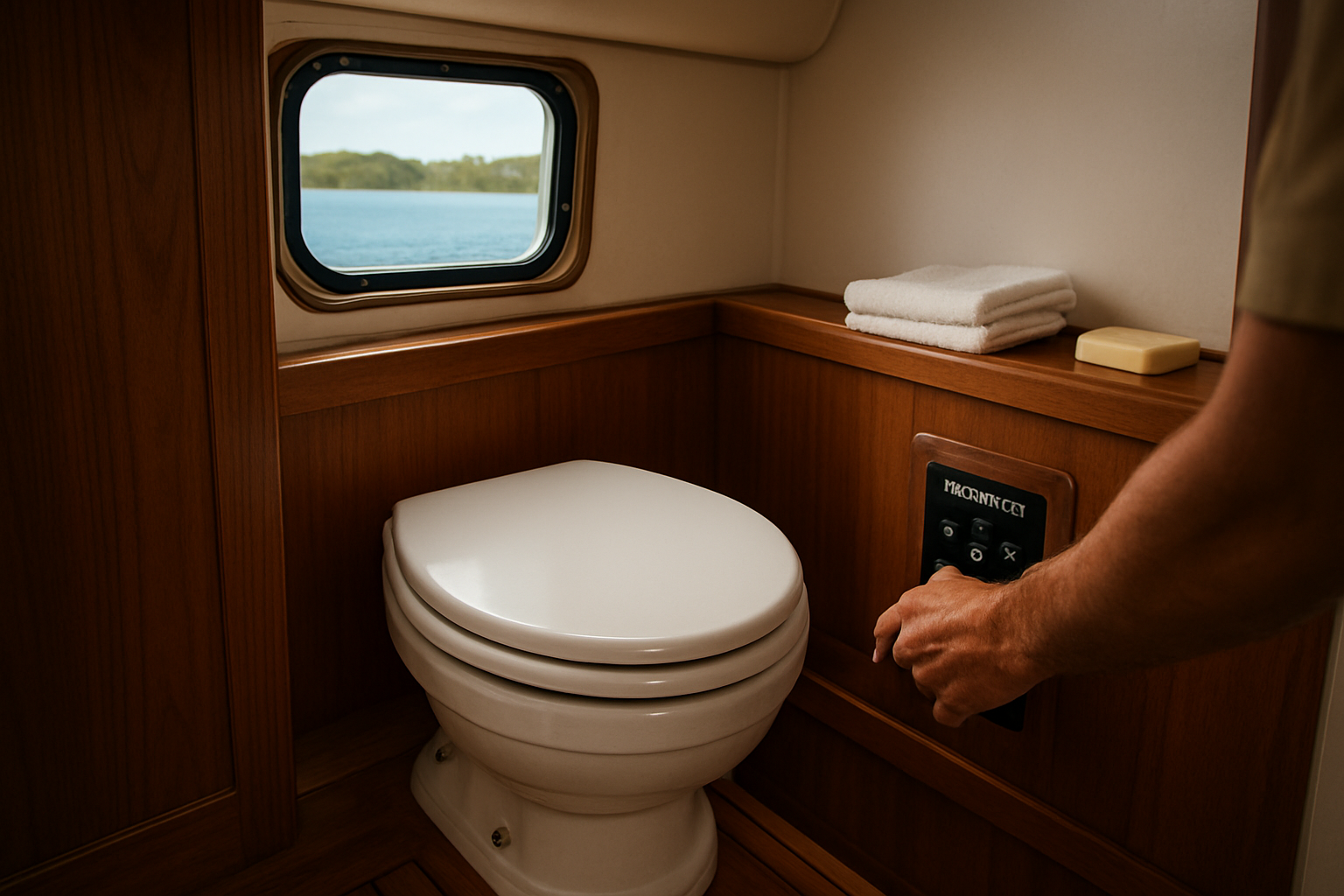
San Blas catamaran bathrooms (heads) usually use marine toilets connected to holding tanks; flushing options vary (vacuum, electric pump, or manual). Fresh water is limited—crews prioritize rinsing; blackwater is retained and pumped in authorized marinas only. Expect compact space, wet showers, and crew guidance on conservative water use.
Fernando Yemail has spent 10+ years operating charters in Panama—these are practical notes we teach every crew on Feeling Yachty charters.
At a glance — key factors
Marine toilet with holding tank (vacuum or electric pump), sometimes manual pump
Freshwater is finite; watermaker may be present on multi-day charters
Wet heads are common — shower drains to grey or directly to sea depending on system
No blackwater discharge in San Blas; pump-out at marinas or port facilities only
Why this matters for charter guests
Knowing how the head functions helps set expectations and avoids mishaps. On a day charter you’ll use less water and likely not worry about holding tanks. On multi-day trips through the San Blas archipelago — where anchorages are pristine and regulations strict — conservative use keeps the boat comfortable and compliant.
Operational realities
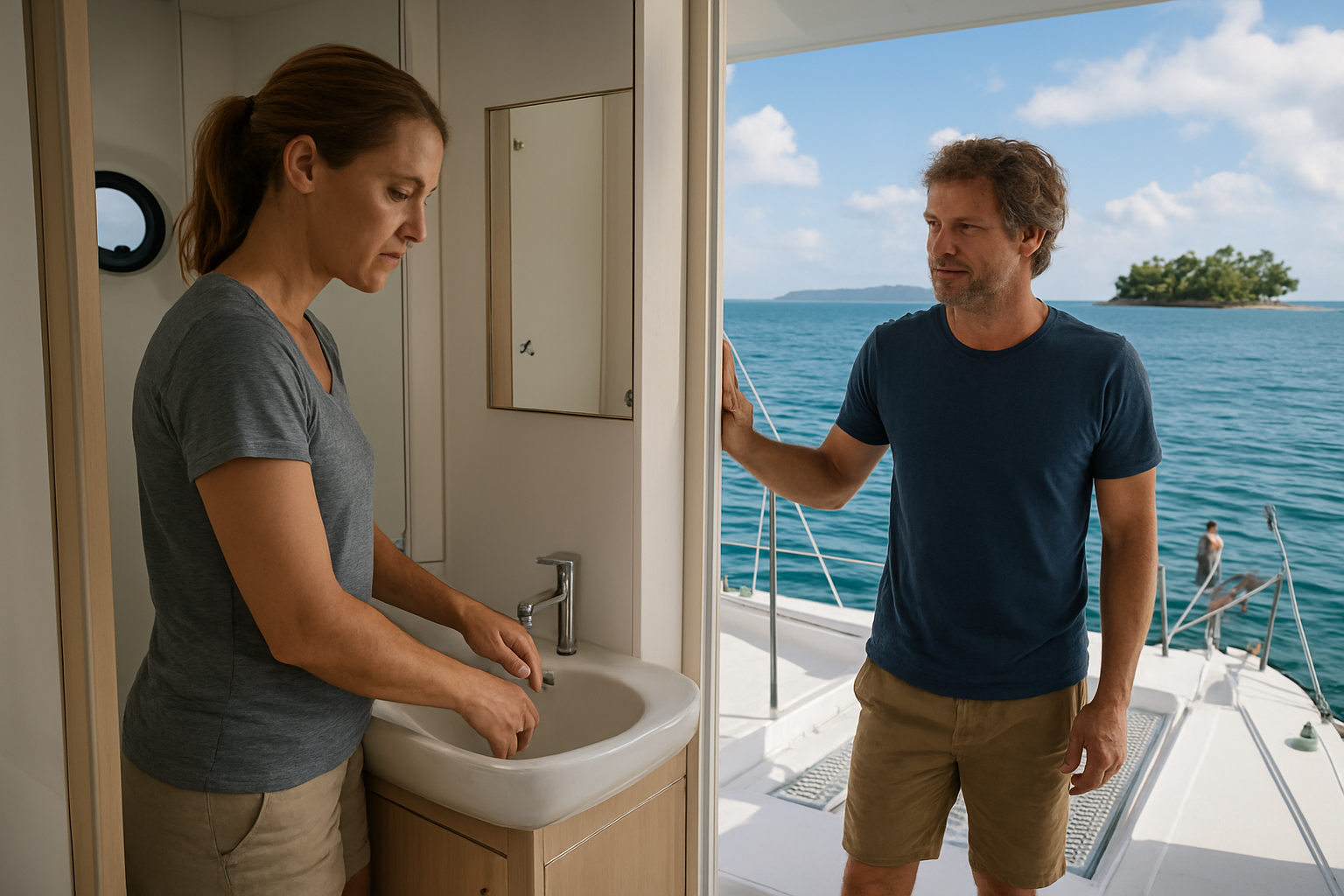
- Crew will brief guests on the head: what can be flushed, flush method, and sink usage.
- Most crews disable overboard blackwater discharge in Panamanian waters.
- Expect every head to have a macerator, pump, or vacuum system; some older charter cats still use manual pumps.
Guest comfort tips
- Use anti-bacterial wet wipes (checked with crew) and place solids only in the toilet unless instructed otherwise.
- Limit shower time, and let crew know about any medical needs requiring extra water.
- Follow the crew’s sign on pump switches and vacuum cycles.
How the systems actually work — concise technical primer
There are three common configurations you’ll see on charter catamarans operating in Panama:
Uses a vacuum pump to clear the bowl; low water use, reliable if crew maintains vacuum lines. Common on newer cats.
Macerates solids and pumps them into the holding tank. Requires caution: sanitary products can clog the macerator.
Found on older yachts; uses a hand or foot pump. Simple but not ideal for large groups or limited crew during busy trips.
Materials and guest dos and don’ts
- Do flush only approved toilet paper (crew will confirm brand) or use designated bins for wipes.
- Don’t flush sanitary items, cotton pads, diapers, or seafood waste—these are the most common causes of blockages.
- Do run a quick rinse after showering; avoid hair being washed into scuppers.
Maintenance cadence (why crews ask you to use less water)
Holding tanks have finite capacity. On multi-day San Blas routes crews monitor tank levels and schedule pump-outs at port or when entering mainland marinas. Watermakers can refill freshwater tanks but generate saline brine and require fuel and crew time—limiting unnecessary use protects equipment and keeps the mood calm onboard.
Local rules and environmental considerations
Panama enforces strict no‑discharge zones in the San Blas (Guna Yala) region. Discharging blackwater into anchorages or reef areas harms coral and violates local regulations. Professional charter operators, including Feeling Yachty crews, never discharge blackwater in the islands and arrange pump-outs at permitted locations.
Compare: Catamaran heads vs monohull heads
- Catamarans: more headroom in bathrooms, often multiple en-suite heads, better balance reduces movement while flushing.
- Monohulls: smaller heads, more tilt under sail which affects flushing comfort; older systems more common on budget charters.
Best for / Less ideal for
- Groups wanting comfort and multiple heads.
- Multi-day charters with experienced crew and watermaker-equipped boats.
- Guests who follow briefings and are conscious of water use.
- Large events where frequent use will tax holding tanks without scheduled pump‑outs.
- Guests who insist on flushing everything without reading the head signs.
Trust & operational credibility
This guidance comes from a decade of running charters in Panama and the operational playbook we use across the Feeling Yachty fleet. We prioritize clear guest briefings, scheduled maintenance, and conservative water policies to keep your San Blas trip smooth. See our fleet and rental options at Panama yacht rentals and learn about crew training at Feeling Yachty crew.
Planning & bookings
Day charters behave differently than overnight trips—discuss head capacity and pump-out plans with your broker. Browse our Panama experiences or party options: Panama tours, Panama yacht party.
Water & Waste: local rules, holding tanks, and daily limits
This section dives into how water and waste policy shapes daily life onboard a San Blas catamaran and what you should expect from your crew.
Holding tank logistics
Holding tanks collect blackwater and are sized according to head count and yacht design. Crews calculate consumption before the trip and schedule pump‑outs at port call if needed. On a 3‑4 day San Blas itinerary with 8–10 guests, it’s standard practice to plan for at least one pump‑out or use a watermaker to offset freshwater use.
Watermakers, generators and fuel considerations
Watermakers allow longer trips but need fuel and maintenance. Fuel consumption goes up when running desalinators and generators—this is part of operational planning and pricing. If you’re chartering a catamaran with a watermaker, ask your broker about the expected generator hours and any associated fees or fuel surcharges.
Crew routines and guest briefings
On day one the crew will show where to find spare toilet paper, how to flush (hold for X seconds, press Y), and where to dispose of non-flushable items. Keep an ear out—these briefings prevent nearly every common problem.
- Q: Can I shower as often as I like? A: Short rinses are fine; long hot showers are discouraged unless the yacht has ample freshwater or a watermaker.
- Q: What about biodegradable wipes? A: Even biodegradable wipes can clog systems—use crew-approved products only.
Emergency: if the head clogs
Crew carry basic plumbing kits and spare macerator parts. Most blockages are cleared quickly; in rarer cases the crew manages tank routing and notifies the captain. Panicked flushing or DIY fixes can worsen damage—always alert the crew first.
Regulatory & cultural respect in Guna Yala
Guna communities are stewards of the islands. Respect local rules, avoid discharging blackwater, and allow crewmembers to coordinate pump-outs at authorized facilities. Doing so protects reefs and maintains good relations with local communities you’ll visit.
Extra operational depth (dropdowns)
Running a watermaker increases generator hours and fuel burn. For cost-sensitive charters, crews ration freshwater and use shore pump-outs instead of frequent desalinator cycles.
Crews deep-clean heads between charters: macerator check, hoses inspection, and sanitation. See our safety and cleaning standards: Yacht safety protocols.
Plumbing damage due to misuse is typically charged to charterers under standard terms. Check boat terms of service before you book.
Useful internal links
Premium CTA
If you want a specific head capacity or have medical needs, tell us at booking so we assign the right catamaran and crew. We match expectations to equipment and routes — that’s how top‑tier charters stay relaxed.
Why choose Feeling Yachty for Panama
Our founder, Fernando Yemail, built the operational checklists used fleet‑wide after 10+ years of charters and 2,650+ reviews across platforms. We combine local knowledge with practical systems so heads and guest experience remain predictable and premium. Learn more about who we are: Who we are.
Frequently asked questions
 English
  Español de Colombia