How Much Does It Cost to Charter a Yacht in Panama

The cost of chartering a yacht in Panama isn’t a fixed number—it’s a combination of variables that depend on the type of boat, how long you’re using it, where you’re going, and what kind of experience you expect onboard. When people ask “how much does it cost,” what they’re really asking is what kind of trip they can build within a certain budget.

From my experience running charters here, the biggest misunderstanding is thinking yacht pricing works like a hotel room. It doesn’t. You’re not just paying for space—you’re paying for movement, crew, fuel, logistics, and access to places you can’t reach otherwise.

How Yacht Charter Pricing Works in Panama

In Panama, most charters are structured by time. You’re typically booking a half-day, full-day, or multi-day experience. The yacht, captain, and route are bundled together, which simplifies things for guests.

In most charters we operate in Panama, clients are not managing the boat—they’re choosing how they want to spend their time. That’s why pricing is tied directly to duration and vessel type.

A smaller boat for a few hours might feel affordable, but a larger yacht for a full-day experience becomes a different category entirely. Not because of luxury alone, but because of operational scale.

If you want to see how options are structured in real time, browsing available Panama yacht rentals gives a clearer picture of how different vessels are positioned in the market.

Base Price Ranges You Can Expect

To give you a realistic idea, most yacht charters in Panama fall into a few general pricing ranges.

Smaller boats and basic yachts typically start around $150 to $300 per hour. These are usually used for short trips, small groups, or quick island runs.

Mid-size yachts—where most people land—range from about $300 to $600 per hour. These are comfortable, have more space, and work well for groups, celebrations, or full-day experiences.

Larger luxury yachts can range from $800 to over $2,000 per hour depending on size, amenities, and crew. At that level, you’re not just renting a boat—you’re creating a private event space on the water.

But hourly pricing only tells part of the story.

In this area, most charters are sold as packages. For example, a full-day charter might include a fixed number of hours, fuel for a standard route, and crew. Once you move beyond that—longer distances, extra time, or special requests—pricing adjusts.

What Actually Drives the Cost

From my experience running charters, there are four main factors that shape the final price.

The first is the size of the yacht. Larger vessels require more fuel, more crew, and more maintenance. That alone changes the base rate significantly.

The second is duration. A two-hour trip is very different from a full-day charter. Even if the hourly rate looks similar, longer bookings often include additional costs tied to fuel and crew time.

The third is the route. In Panama, distance matters more than people expect. Heading to nearby islands like Taboga is one thing. Going deeper into the Pearl Islands or planning multi-stop routes changes fuel consumption and timing.

The fourth is the experience itself. Catering, drinks, decorations, DJs, water toys—these all add layers to the cost.

A common mistake we see is clients focusing only on the base price and not considering how they want the day to feel. The experience usually defines the budget more than the boat alone.

Crewed Charters vs Cost Efficiency

In Panama, most charters are crewed, and that impacts pricing in a good way.

You’re paying for a captain and sometimes additional crew, but you’re also gaining efficiency. Routes are optimized, time is managed properly, and you avoid costly mistakes like incorrect anchoring or wasted fuel.

From my perspective, crewed charters often provide better value overall. You’re not just paying for labor—you’re paying for local knowledge.

If you’re curious about how the team operates, you can get a sense of it through the Feeling Yachty crew and how we structure onboard service.

Hidden Costs People Don’t Expect

This is where most pricing confusion happens.

Fuel is usually included for standard routes, but if you extend your trip or change destinations, additional fuel charges can apply. And fuel in Panama—especially for larger yachts—adds up quickly.

Crew gratuity is another factor. It’s not always included in the base price, and while it’s optional, it’s standard in the industry if the service meets expectations.

Overtime is another common one. If your trip runs longer than planned, you’re paying for extra crew hours and additional fuel.

Then there are optional add-ons. Catering, premium drinks, decorations, and special requests can shift the total cost significantly depending on how customized the experience becomes.

From my experience, the best approach is to define the experience first—then match it to the right yacht and budget.

Cost Differences Based on Use Cases

Not every yacht charter is priced the same because not every trip is the same.

A simple day trip for a couple or small group is usually straightforward. Lower fuel usage, minimal add-ons, and shorter duration keep costs predictable.

But once you move into events, pricing changes.

For example, something like a private yacht party in Panama introduces different needs—sound systems, space for guests, catering, and timing coordination. You’re no longer just cruising; you’re hosting.

That’s why larger yachts are typically used for these experiences. They’re designed to handle groups, movement, and onboard flow in a way smaller vessels can’t.

Multi-day charters are another category entirely. You’re dealing with provisioning, overnight crew, and extended routes. The pricing becomes more layered, but so does the experience.

How Panama’s Geography Affects Pricing

Panama’s layout plays a direct role in cost.

The Pacific side—especially around Panama City—gives you access to the Pearl Islands within a few hours. That makes day charters practical and efficient.

But distances still matter. Moving between islands, adjusting routes, or staying out longer increases fuel consumption and time.

In most charters we operate, guests don’t realize how much tidal movement affects planning. The Pacific side has strong tides, which means timing your departure and return impacts both safety and fuel efficiency.

On the Caribbean side, like San Blas, navigation is slower and more technical. Shallow waters and reef systems require careful routing, which can extend travel time even if distances look short on a map.

All of that influences pricing indirectly.

Comparing Yacht Charters to Other Options

Some people compare yacht charters to tours or other experiences, but they’re fundamentally different.

A tour follows a fixed schedule with shared groups. Pricing is lower because the experience is standardized.

A yacht charter is private and customizable. You choose the route, the timing, the group, and the pace.

If you’re comparing options, looking at structured alternatives like Panama tours helps clarify the difference. One is designed for access and convenience, the other for control and personalization.

From my experience, clients who understand this difference early make better decisions about budget and expectations.

Is It Worth the Price?

This is the question that matters more than the number itself.

From my experience running charters, the value comes from what you get access to. Private beaches, flexible routes, uninterrupted time with your group—those aren’t things you can replicate easily with other experiences.

A yacht gives you control over your environment. You’re not sharing space, waiting on schedules, or adjusting to other people’s plans.

That’s where the cost starts to make sense.

How to Approach Your Budget

If you’re planning a yacht charter in Panama, the best way to think about cost is backwards.

Start with the experience you want. How many people? What kind of day? Relaxed, active, or social? Where do you want to go?

Then match that to the right yacht.

From there, the pricing becomes clearer because it’s tied to something real—not just a number.

If you’re unsure, the simplest way to move forward is to reach out and ask questions. You can do that directly through the contact page and get a clearer breakdown based on what you’re actually trying to plan.

At the end of the day, chartering a yacht in Panama isn’t about finding the cheapest option. It’s about understanding what you’re paying for and making sure it aligns with the kind of experience you want to have on the water.
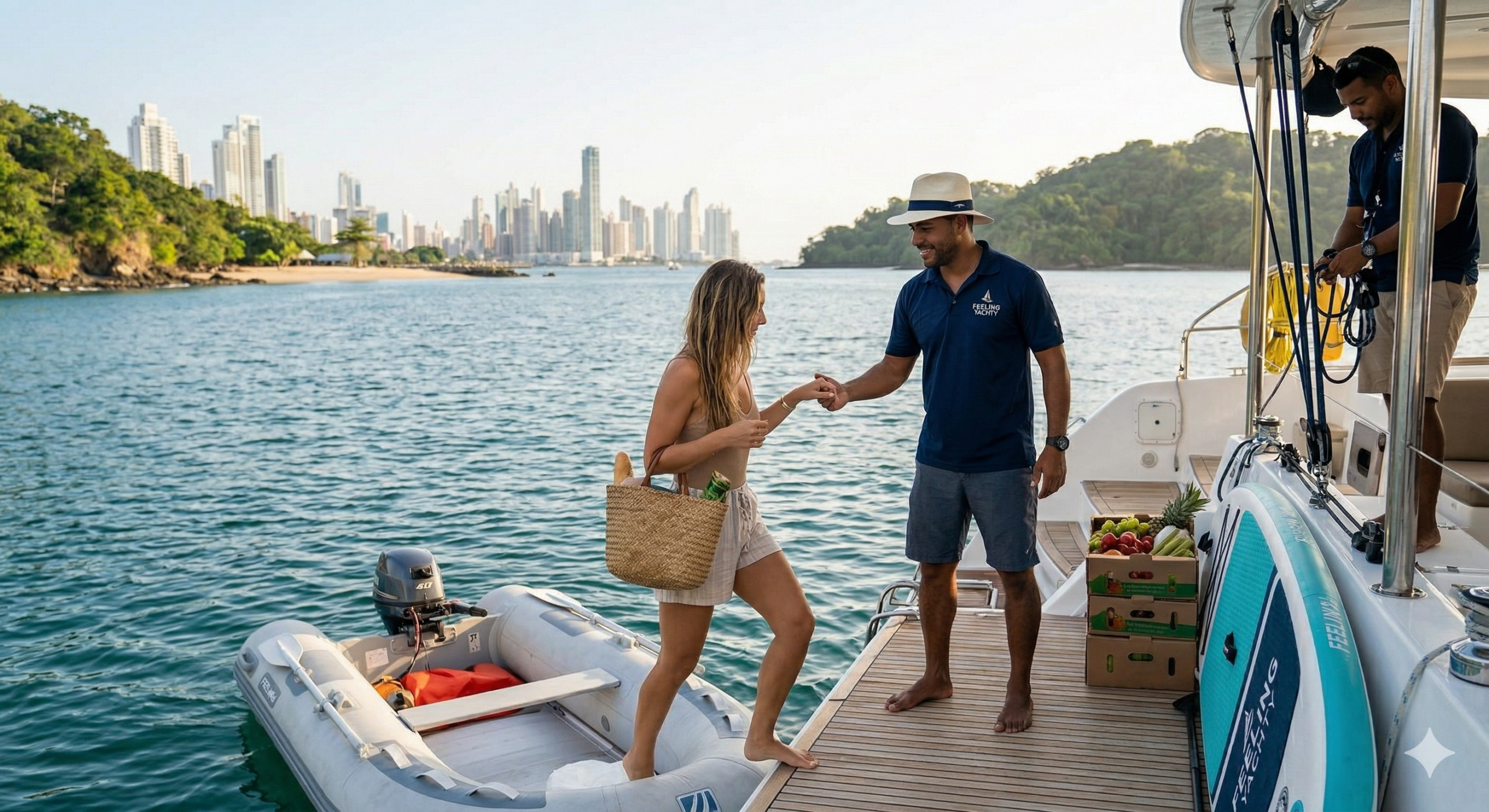
Fuel limits, crew gratuity, and overtime charges can affect final pricing depending on duration and route.

Panama has year-round boating conditions, but weather patterns can influence route selection and water conditions.

Panama Yacht Rental FAQs

The cost is determined by yacht size, duration, route, and onboard experience. Larger yachts, longer trips, and customized services increase the overall price because they require more fuel, crew, and coordination.

You should budget based on the type of experience you want, not just the boat. Exploring available Panama yacht rental options helps you understand how pricing changes across different vessels and trip styles.

The base price usually includes the yacht, captain, crew, and fuel for standard routes. Additional services like catering, extended travel, or special setups are typically added on depending on your request.

Most charters are offered as time-based packages rather than simple hourly bookings. This structure makes it easier to plan routes, manage fuel, and create a smoother overall experience.

Extra costs can include additional fuel for longer routes, crew gratuity, catering, and overtime. These are usually tied to how much you customize the trip beyond the standard package.

Yes, yacht charters are more expensive because they are private and fully customizable. Compared to Panama tours, you’re paying for exclusivity, flexibility, and control over the entire experience.

The destination affects fuel usage and travel time, which directly impacts cost. Trips to closer islands are more efficient, while longer routes or multi-stop itineraries increase the total price.

Yes, yacht charters are commonly used for events like birthdays and celebrations. Experiences such as a private yacht party require larger vessels and additional services, which can raise the cost.

Yes, the value comes from having a private, controlled experience with access to locations that are not easily reachable otherwise. You’re paying for flexibility, privacy, and a personalized environment on the water.

Panama Yacht Rental Planning

Turn This Panama Yacht Guide Into a Full Charter Plan

Reading about Panama yacht rentals? Use this service hub to connect the blog topic with the next planning steps: choose the route, match the yacht, confirm the boarding marina, and add services like chef, catering, transportation, photo/video, DJ, or VIP club support.

🛥️ Main entity: Panama yacht rentals 🧭 Route: Panama Bay, Amador, Taboga 📍 Boarding: marina confirmed after yacht match ✨ Services: food, media, music, transport, VIP

Recommended Planning Path

1. Choose the route Bay cruise, sunset route, Taboga-style island day, or full-day itinerary.
2. Match the yacht Pick the right vessel based on guest count, comfort, occasion, and timing.
3. Add services Chef, catering, transportation, photo/video, DJ, or VIP club planning.
4. Confirm boarding Final marina, dock, arrival time, and captain instructions are confirmed after booking.

Tip: for best results, send your date, guest count, preferred route, occasion, food needs, media needs, music style, and whether you want after-yacht VIP club planning.

Panama Yacht Blog Paths

Explore More Panama Yacht Guides, Routes, Pricing & Planning Topics

Explore related Panama yacht rental topics including Panama Bay cruises, Taboga Island trips, Pearl Islands charters, Panama Canal routes, yacht party planning, private boat tours, pricing questions, safety expectations, and add-on services.

📍 Panama City 🌴 Taboga Island 💎 Pearl Islands 🚢 Panama Canal 🎉 Yacht Parties 🛥️ Private Charters
Panama Booking WhatsApp +507 212-1729 for fast yacht rental help, dates, routes, and availability.
Panama Office / Call Support +507 202-1279 for planning support, office questions, and Panama City charter coordination.
Panama Emergency Reference Dial 911 for emergencies, 103 for fire/ambulance, 104 for police, or SINAPROC WhatsApp +507 6998-4809.

Trusted by Guests Exploring Panama Yacht Rentals, Island Trips & Private Tours

Feeling Yachty supports Panama guests with real charter planning, yacht comparisons, Panama City pickup guidance, Taboga and Pearl Islands route help, private event planning, and direct booking support for on-the-water experiences.

⭐ 2,400+ Reviews 📍 Panama City, Panama 🚢 Canal & Island Routes 💬 WhatsApp +507 212-1729

What Guests Often Mention About Feeling Yachty Panama

Guests often mention responsive WhatsApp help, smoother planning, clear route guidance, friendly crews, organized pickup details, and customizable yacht experiences for Panama events, island days, and private outings.

TripAdvisor • 1,500+ Total • 2,400+ Panama Planning + Service WhatsApp Support
“Easy WhatsApp communication, clear pickup details, and helpful guidance before choosing the yacht.”

— Panama booking & communication

“The route felt organized, the views were beautiful, and the team helped us understand timing for the water.”

— Panama Bay, Taboga & island routes

“Helpful for celebrations, especially when coordinating food, music, timing, decorations, and group details.”

— Yacht parties & private events

Panama Yacht Safety

Yacht Safety Protocols in Panama: What Guests Should Know

A yacht day in Panama can include calm island cruising, open Pacific passages, Caribbean weather shifts, marina departures, and Canal-adjacent navigation. Feeling Yachty prioritizes guest safety through pre-departure checks, weather awareness, responsible routing, clear passenger briefings, and coordination with qualified local marine operators.

This Panama safety guide is built around the main entities guests search for: Panama yacht charters, boat safety in Panama, Panama Bay, Taboga Island, Las Perlas, San Blas / Guna Yala, Bocas del Toro, Panama Canal waters, life jackets, marine weather, navigation rules, and emergency readiness.

🦺 Safety Gear 🌦️ Weather Checks ⚓ Local Routing 🚤 Guest Briefings

Life Jackets, Passenger Count & Onboard Safety Gear

Before leaving the dock, guests should know where life jackets are stored, how to move safely around the vessel, and who to follow for crew instructions. Passenger count, vessel size, route, and local operating conditions all affect the safety plan for the day.

Marine Weather, Swell, Wind & Rain Awareness

Panama charters should account for marine forecasts, wave height, wind, visibility, and fast-changing rain patterns. IMHPA and SINAPROC are helpful official references for weather alerts, prevention notices, and conditions affecting Panama’s Pacific and Caribbean coasts.

Panama Canal Waters & Small Craft Awareness

Routes near Panama Canal waters require extra awareness around commercial traffic, restricted areas, communications, and ACP procedures. Small craft, handline vessels, and transit-related movements should follow Panama Canal Authority guidance where applicable.

Guest Briefings & Responsible Charter Behavior

A clear safety briefing helps guests understand boarding, seating, swim stops, alcohol responsibility, trash handling, emergency communication, and what to do if the captain changes the route for safety.

Popular Panama Boating Areas Have Different Safety Considerations

Panama City • Taboga • Las Perlas • Caribbean
Panama Bay

Best for city skyline cruising, marina departures, sunset routes, and calm-day private charters near Panama City.

Taboga Island

Popular for day trips, beach time, anchoring, swimming, and short island escapes from Panama City.

Las Perlas

Longer routing may require stronger planning around fuel, swell, timing, communications, and return conditions.

San Blas / Guna Yala & Bocas

Caribbean trips may involve local access rules, reef awareness, weather windows, and community-specific logistics.

Guest Safety Checklist Before Your Panama Yacht Charter

  • Confirm the exact pickup point: marina, dock, beach meeting point, or tender transfer.
  • Ask about safety gear: life jackets, throwable flotation, communication equipment, and first-aid basics.
  • Check the forecast: wind, swell, rain, lightning risk, and coastal advisories before departure.
  • Respect the route: the captain may adjust timing, anchorages, or island plans for safety.
  • Protect children and non-swimmers: keep them supervised and fitted with proper flotation when advised.

Operator & Route Planning Checklist

  • Review passenger count: match guests, crew, vessel capacity, and comfort expectations.
  • Plan for Panama conditions: tide, current, daylight, marina traffic, and anchoring limitations.
  • Monitor official notices: AMP, ACP, SINAPROC, and IMHPA may publish relevant maritime or weather information.
  • Brief guests clearly: boarding, swim stops, deck movement, trash, alcohol, and emergency steps.
  • Keep communication ready: confirm phones, radios, marina contact, and backup plans for route changes.

Panama Yacht Safety FAQ

Is Panama safe for yacht charters and boat rentals?

Panama can be an excellent yacht destination when the charter is planned around the right route, vessel, weather window, passenger count, and local operating rules. Safety depends on preparation, not just the destination.

What should guests know before a Panama yacht trip?

Guests should confirm pickup details, trip length, included stops, weather expectations, onboard rules, where safety gear is located, and whether the route includes open water, island cruising, or Canal-adjacent navigation.

Are Panama Bay, Taboga, and Las Perlas the same type of trip?

No. Panama Bay and Taboga are typically shorter routes from Panama City, while Las Perlas usually requires more planning around distance, sea state, weather, daylight, and communications.

Who publishes official marine weather or safety notices in Panama?

Useful official sources include the Autoridad Marítima de Panamá, the Panama Canal Authority, SINAPROC, and the Instituto de Meteorología e Hidrología de Panamá.