
Bareboat Charter Agreement Template for Florida Boat Owners
Guest reviews · ★ 4.8 from 2,888
A bareboat charter agreement hands your boat to the charterer without a captain or crew: they take possession and command, choose and pay any captain themselves, and you stay ashore. Below is a free fill-in template, English and Spanish, built from the agreement and passenger waiver Feeling Yachty uses in Miami, with what each clause does and where the law draws the line.
Download the template (PDF, fillable)
Bareboat charter agreement with a condition report and a passenger waiver for every guest. Fill it in on screen or print it. A sample for information, not legal advice: have a Florida maritime attorney review it before you use it.
What is a bareboat charter?
A bareboat (or demise) charter is the hire of the boat itself. The owner supplies no captain or crew; for the length of the charter the charterer has possession, command and navigation of the vessel, either running it or hiring an independent captain. Federal law treats a boat "leased, rented, or chartered to another for the latter’s pleasure" as a recreational vessel (46 U.S.C. 2101), which is why a real bareboat charter is not a passenger-for-hire trip.
Bareboat or passenger for hire: where the line is
The difference is who provides the crew. Under 46 U.S.C. 2101, a boat under 100 gross tons that is chartered with the crew provided or specified by the owner becomes an uninspected passenger vessel with up to 6 passengers, and a small passenger vessel above 6; one chartered with no crew provided or specified becomes a small passenger vessel only above 12 passengers. The charterer is not counted as a passenger. An uninspected passenger vessel must be run by a Coast Guard licensed operator (46 U.S.C. 8903), and a small passenger vessel needs a Coast Guard inspection (46 CFR subchapter T; uninspected vessels are in subchapter C).
The Coast Guard enforces this hard. Its Operation Safe Voyage release puts it plainly: in a bareboat charter the owner cannot require or steer the renter to a designated crew member, and "once an owner dictates which captain the renter must use, it is no longer a bareboat charter." In practice a valid bareboat charter means:
- No crew from the owner. The owner does not provide, name, require, pay or supervise the captain or crew.
- Owner not aboard. Neither the owner nor anyone representing them goes along.
- Charterer in command. The charterer has possession and control for the whole term, and pays the captain directly under a separate agreement.
- 12 passengers at most, the charterer not counted, and never more than the boat’s capacity.
- No money from guests. The charterer does not collect fares from the people aboard.
What the agreement covers, clause by clause
Every clause below comes from the agreement and waiver guests sign with Feeling Yachty in Miami, with the booking details turned into blanks; the bareboat clauses that the online form covers elsewhere are written out in full.
- Parties. The owner (or company and its signatory) and the charterer, with date of birth, address, ID and an emergency contact.
- Vessel. Name, make and model, USCG documentation number, state registration and decal, hull ID, length, home marina and the maximum passengers. The capacity clause caps the people aboard, captain and crew not counted.
- Term, delivery and return. Date, time, duration, the delivery and return marina, and the permitted cruising area; a condition report (Annex A) records engine hours, fuel and existing damage at both ends.
- Charter hire, tax and deposits. The hire, Florida sales tax, the reservation deposit (non-refundable, as in the Miami agreement), any security deposit and the late-return rate. The weather wording is the site’s: charters run rain or shine, and the deposit is refunded only when the Coast Guard says it is not safe to go out.
- Possession, command and control. The bareboat core: no crew, fuel or provisions from the owner, owner not aboard, 12 passengers at most, and any list of captains is for information only.
- Captain. The charterer selects the captain; the captain is an independent contractor, not the owner’s agent or employee. The captain’s name, credential and fee go on the form, or the charterer’s own experience if they will run the boat.
- Use of the vessel. No passengers for hire, sub-charter or unlawful use, and the drug and alcohol policy: illegal drugs are prohibited and the captain may refuse boarding or end the charter, without refund, if anyone is impaired or unsafe.
- Damage and insurance. The charterer pays for damage caused by their group, including the deductible; the owner states the insurance on the boat and may refuse delivery or require the boat’s return after a breach.
- Assumption of risk, release, indemnity and limitation of liability. The charterer accepts the risks of boating and releases the owner, operator, captain and crew to the extent the law allows.
- Governing law. Federal maritime law and, where it applies, Florida law, with disputes in Miami-Dade County.
- Electronic signature. The agreement may be signed electronically, which the federal E-SIGN Act and Florida’s UETA recognise.
What this template includes
- Owner, charterer, vessel and captain details as fill-in fields, with every booking detail left blank
- Bareboat clauses: possession and command, no crew, fuel or provisions from the owner, owner not aboard, the 12-passenger ceiling, captains known to the owner
- The captain’s credential, fee and acknowledgment, or the charterer’s experience statement and Florida boating safety ID
- Deposit, weather, drug and alcohol, damage and capacity clauses, each with its own initials box
- Prohibited uses, insurance, delivery and return, owner’s statements and the right to end the charter
- The ten clauses of the charter agreement and liability waiver, governing law and electronic signature
- Signature blocks for owner, charterer and captain, initials on every page
- Annex A: condition report at delivery and return. Annex B: passenger waiver for every person aboard
The passenger waiver
Everybody coming aboard signs the waiver, the person who booked included, and a parent or guardian signs for minors. It holds three things: an assumption of the risks of boating (slips, falls, wakes, weather, sun), a release of the owner, captain and crew, and notice of any security cameras aboard. Keep one signed copy per guest with the agreement.
Insurance, tax and Florida rules
Insurance. Tell your insurer you charter the boat bareboat: a policy written for private use may not cover it. The template has lines for the insurer, policy number, limit and deductible.
Sales tax. Florida taxes a bareboat lease on its gross proceeds; a captain the charterer hires under a separate contract is not part of that charge (Fla. Admin. Code R. 12A-1.071(16)). That is why the template keeps the captain’s fee out of the charter hire.
Operators and liveries. Whoever drives must carry the licenses the law requires: in Florida an operator born on or after January 1, 1988 needs a boating safety ID card unless exempt, for example as a USCG-licensed master (section 327.395). An owner who advertises a boat for hire without providing or requiring a USCG-licensed master is a livery under section 327.54, with an FWC permit, insurance of at least 500,000 dollars per person and 1 million dollars per event, a written agreement, pre-rental instruction and no renters under 18.
Drug testing. The Coast Guard’s chemical-testing rules for mariners are in 46 CFR part 16; if a charterer hires a licensed captain, ask whether the captain is enrolled in a testing program, and note it on the form.
Can the agreement be signed electronically?
Yes. Under the federal E-SIGN Act and Florida’s Uniform Electronic Transactions Act, a signature or contract cannot be denied effect only because it is electronic. Keep the signed file, the date and time, and who signed.
What Feeling Yachty guests sign
Guests who book a Miami charter with Feeling Yachty sign before departure, online: the charter verification form with a signature and government ID, and the charter agreement and passenger waiver from their account. Every clause is on the page, and the drug and alcohol, damage and deposit policies are each accepted on their own. The booking terms are on the charter terms page, and what the crews check on board is on yacht safety protocols.
Rather not run charters yourself? List your yacht with Feeling Yachty, or browse the Miami yachts we charter.
Setting up a bareboat charter business? Our sister guide Yachty Guide goes further: bareboat charters for owners and an annotated bareboat charter contract example.
Bareboat charter agreement questions
Is this template legal advice?
Can I use it for my own boat?
Do I need a captain?
Can I recommend a captain?
Can the owner be the captain?
What is a demise charter?
What is a passenger waiver?
Questions about chartering in Miami?
Tell us your date and group, or ask about listing your boat, and the Miami team answers.
For every topic, from booking and pricing to routes and safety, see the full Miami Yacht Tips guide library.
 Miami Yacht Party Ideas: Twelve Formats That Work on a Real Boat
 Sunset Yacht Charter in Miami: Timing, Route and Comfort Guide
 Airbnb Yacht vs. Private Yacht Charter in Miami: What Are You Actually Booking?
 Celebrity-Style Yacht Rentals in Miami: Privacy, Service, and Realistic Expectations
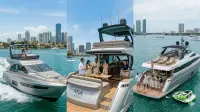 Hourly, Day or Weekly Yacht Charter in Miami: Comparing Quotes
 How to Plan a Miami Bachelor Party Weekend Around a Yacht
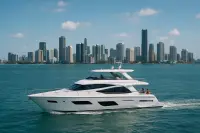 Best Yacht Size for a Party in Miami: Match the Layout to Your Group
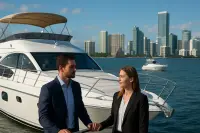 How to Plan a Corporate Yacht Event in Miami for Teams and Clients