Hidden Costs of Yacht Charters in Panama
Hidden costs in yacht charters in Panama are the additional expenses that are not always obvious in the initial price but become part of the final experience once details are confirmed. These costs are not necessarily hidden in a deceptive way—they’re often tied to how the charter is customized, where you go, how long you stay out, and what level of service you expect.
From my experience running charters in Panama, most pricing confusion doesn’t come from the base rate of the yacht. It comes from everything around it. The boat itself is only one part of the experience. What happens during the trip is where costs start to shift.
When someone looks at a charter and sees a number, that number usually reflects a standard setup. The moment you go beyond that—longer routes, upgraded service, specific requests—that’s where additional costs come into play.
Fuel Is the Most Common Variable
Fuel is easily the most misunderstood cost in yacht charters here.
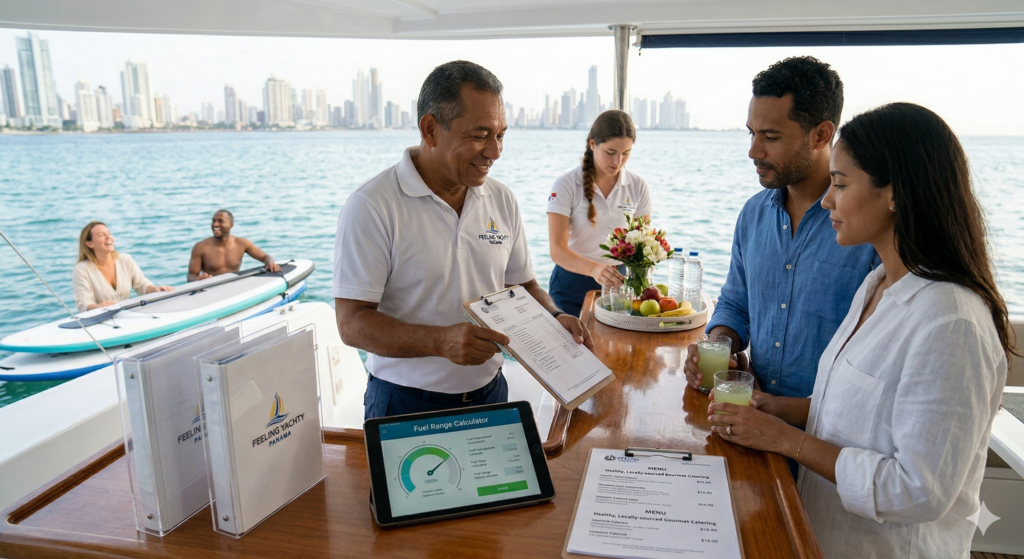
In Panama, distances matter more than people expect. A quick cruise near the city uses very little fuel. But if you’re heading out to the Pearl Islands, Contadora, or further into the archipelago, consumption increases significantly. And it’s not just distance—sea conditions and speed also affect how much fuel is used.
In most charters we operate in Panama, there’s usually a fuel allowance built into the price for standard routes. But once you go beyond that, fuel becomes a variable cost.
A common mistake we see is clients assuming fuel is always fully included no matter where they go. That’s not realistic in this market. Boats are powerful, and longer routes require planning. If you’re comparing options, looking at different yacht rentals in Panama helps you understand how each operator structures fuel—some include it, others separate it.
Overtime Charges Happen More Often Than You Think
Time is another area where hidden costs show up.
Charters are booked for a set number of hours. Once that time is up, the crew is still working, the boat is still running, and the marina schedule still applies. If the trip runs longer than planned, overtime charges are added.
This usually happens when groups lose track of time while anchored at an island or when the return trip is delayed. In this area, conditions usually stay calm, but timing still matters, especially when coordinating docking schedules back in Panama City.
From my experience, it’s always better to plan slightly more time than you think you need. It avoids rushing at the end and prevents unexpected charges.
Crew Gratuity Is Expected, Not Always Included
Crew gratuity is one of those things that’s not always mentioned upfront, but it’s part of the charter culture.
The crew handles navigation, safety, service, and overall experience. On higher-end charters, they’re also managing food, drinks, and guest comfort throughout the trip.
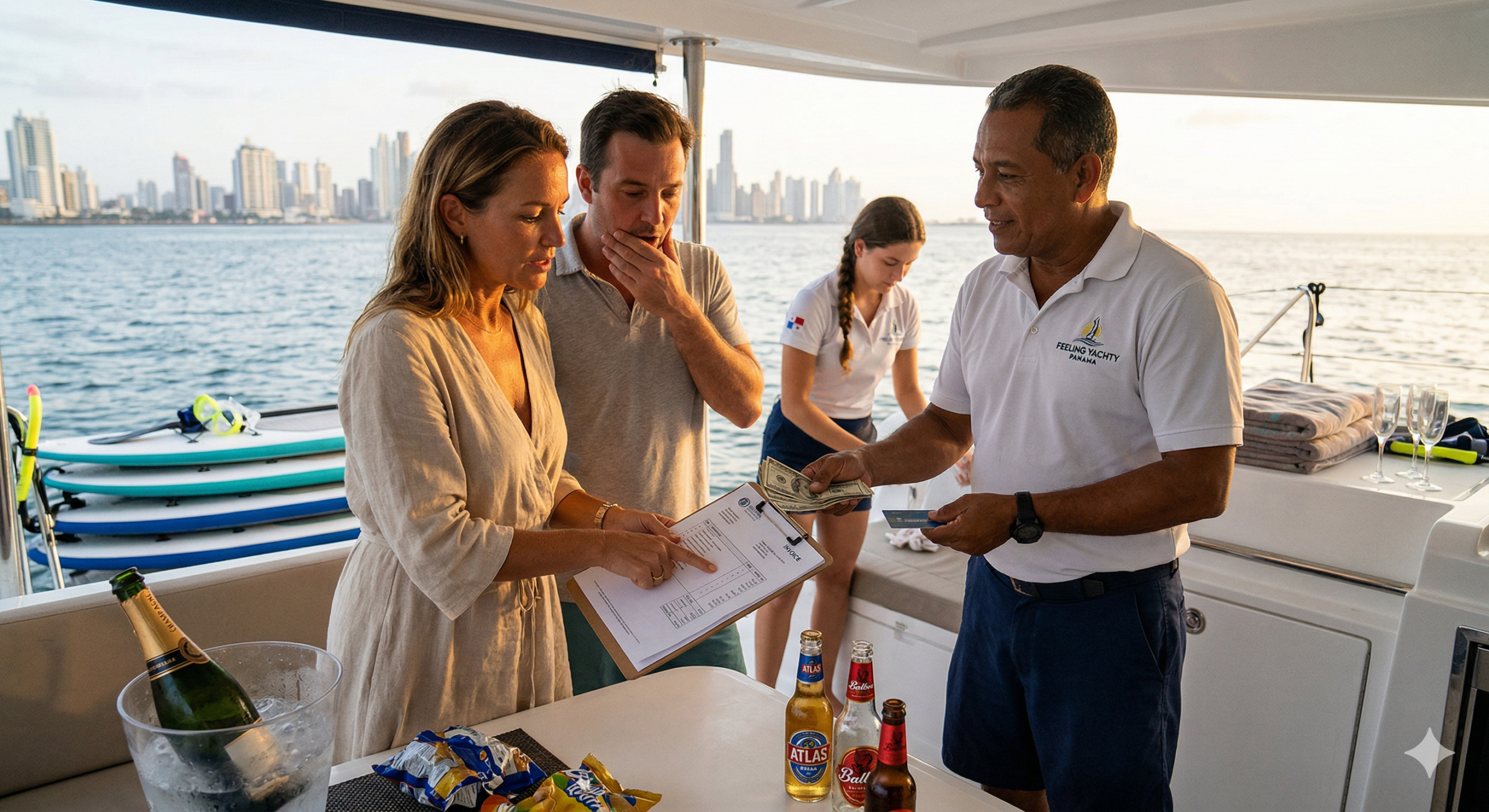
In most charters we operate, gratuity is not automatically included in the base price. It’s typically given at the end of the trip based on the level of service.
A common mistake we see is clients assuming everything is bundled. It’s always worth asking what’s included and what’s left to discretion.
If you want to understand how professional service is structured onboard, looking at the Feeling Yachty crew gives a clearer picture of how roles are divided during a charter.
Catering and Provisioning Add Up Quickly
Food and drinks are another area where costs can vary widely.
Some charters include basic refreshments—water, ice, maybe light snacks. But once you start requesting full meals, premium alcohol, or specific menus, the cost increases.
In Panama, provisioning is done before departure, and everything needs to be planned in advance. If you’re hosting a group, especially for a celebration, catering becomes a significant part of the overall price.
From my experience running charters, this is where customization really shows. Some clients want a simple setup, others want a full dining experience onboard. Both are possible, but they sit at very different price points.
Event Setup Changes the Entire Cost Structure
Not all charters are just casual outings. Events bring a completely different layer of complexity.
If you’re planning something like a birthday or celebration, the yacht becomes more than transportation—it becomes a venue. That means sound systems, decorations, lighting, sometimes even DJs or photographers.
For example, organizing a yacht party in Panama involves coordination that goes beyond the boat itself. There are safety considerations, capacity limits, and setup requirements that influence both logistics and pricing.
A common mistake we see is clients comparing a standard charter to an event charter as if they’re the same. They’re not. The purpose of the trip changes everything.
Water Toys and Extras Are Optional but Impact Pricing
Many clients ask about jet skis, paddleboards, snorkeling gear, or inflatables. These extras are not always included in the base price.
Some yachts come equipped with certain toys, others offer them as add-ons. Availability also depends on the specific vessel and what’s stored onboard.
From my experience, these additions can significantly improve the experience, especially for groups. But they need to be requested in advance, and they do affect the final cost.
Docking, Marina, and Access Fees
Another detail that doesn’t always get attention is marina-related costs.
Depending on where the yacht is docked and where it returns, there may be marina fees involved. These are usually small compared to other costs, but they are part of the operational side of running a charter.
In Panama City, marinas are well-managed, and scheduling is important. Delays or changes in return time can sometimes affect docking arrangements, which ties back into overtime considerations.
Cleaning and Damage Policies
Most professional operators include standard cleaning in the price. But excessive cleaning or damage is treated differently.
If a charter involves heavy partying, spills, or damage to equipment, additional cleaning or repair costs may apply. This is not common, but it’s something clients should be aware of.
A common mistake we see is assuming the yacht can be treated like a disposable space. It’s still a high-value asset that needs to be maintained.
If you want clarity on how responsibilities are handled, reviewing the boat terms and conditions helps set expectations before the trip.
Safety and Compliance Are Built Into Pricing
One thing that is not optional—and should never be treated as an extra—is safety.
Licensed operators in Panama follow strict regulations. That includes certified crew, safety equipment, passenger limits, and operational protocols.
Maintaining these standards requires ongoing investment. It’s part of why pricing varies between operators.
If you’re comparing options, understanding what’s included in terms of safety is important. You can see how this is structured by reviewing yacht safety protocols and what professional charters are required to provide.
Comparing Tours vs Private Charters
Some clients consider tours as an alternative, mainly because they appear cheaper upfront.
Tours follow fixed routes, shared groups, and predefined schedules. Yacht charters are private, flexible, and customizable.
From my experience, tours work well for people who want a simple, structured outing. But if you’re looking for control over timing, route, and experience, a private charter offers a completely different level of value.
If you want to see how structured options differ, exploring available Panama tours gives a useful comparison.
The Real Difference Between Price and Cost
One of the biggest misconceptions in yacht charters is confusing price with total cost.
The price you see is the starting point. The cost is the full experience—fuel, time, service, extras, and customization.
From my experience running charters, clients who take the time to understand this upfront have a much smoother experience. They know what they’re paying for, and there are no surprises.
A lower base price doesn’t always mean a better deal. Sometimes it just means more elements are separated instead of included.
Why Transparency Matters More Than Anything
At the end of the day, hidden costs are not really about surprises—they’re about clarity.
In most charters we operate in Panama, everything can be explained upfront. Fuel ranges, time limits, service levels, and optional extras can all be discussed before the booking is confirmed.
A common mistake we see is clients focusing only on the initial number instead of asking what that number includes.
From my perspective, the best charters are the ones where expectations are clear from the start. When that happens, pricing feels straightforward, and the focus stays where it should be—on enjoying the time out on the water.
 English
  Español de Colombia