
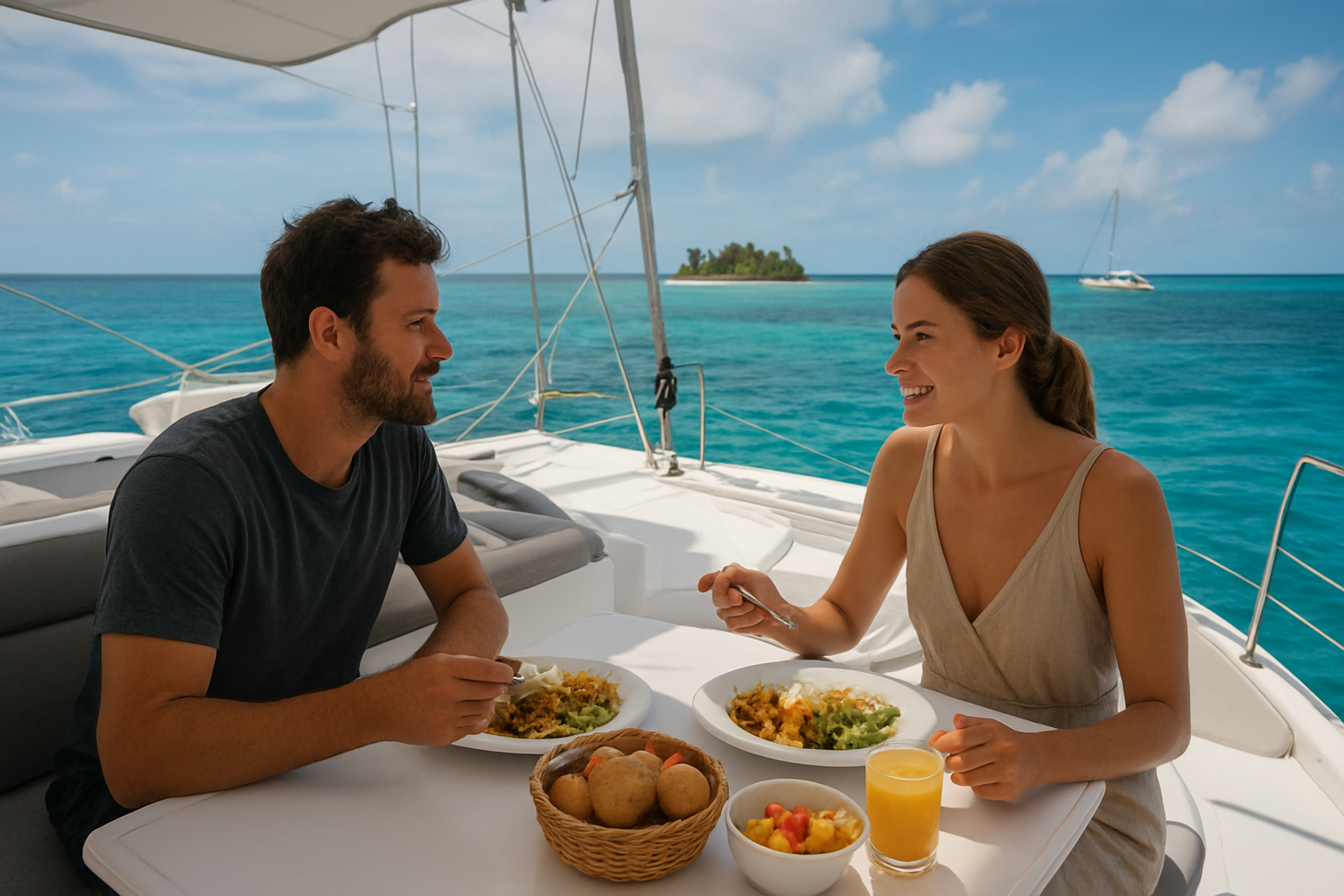
What Do You Eat on a San Blas Catamaran Charter?
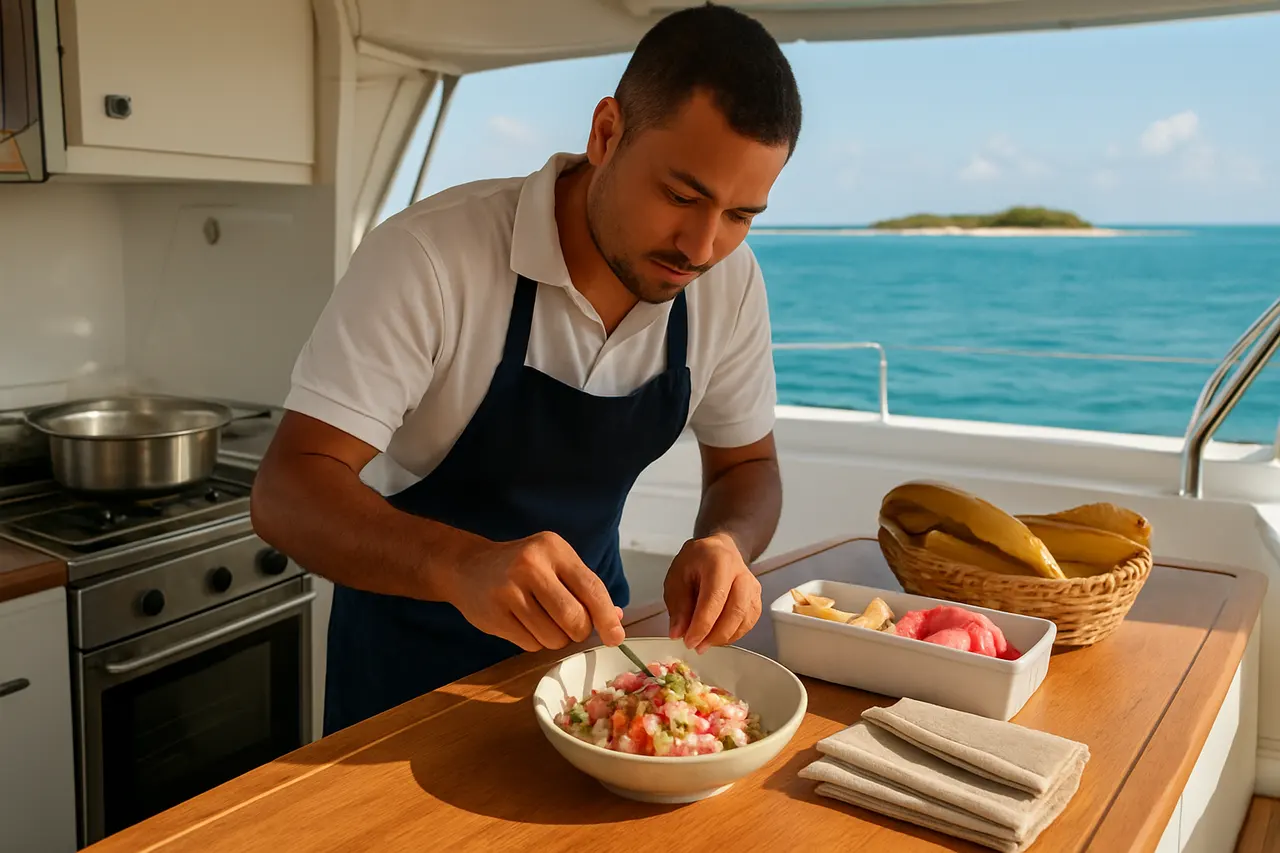
On most San Blas catamaran trips the crew cooks the meals aboard, usually simple dishes and local seafood when available, with drinking water supplied in bottles or a tank. Check before you go which meals are included, whether alcohol is, and tell the crew early about any dietary needs.
What a typical food plan needs to cover
Start with the length and purpose of the booking. For a shorter outing, the main needs may be drinking water, an appropriate meal and snacks. A longer permitted itinerary may require more storage, cooking capacity and an explicit food-service plan.
Ask whether the exact yacht has a functioning refrigerator, galley and safe preparation space. Confirm who prepares the food, whether reusable plates and utensils are available, and whether passengers are allowed to use cooking equipment themselves.
Local seafood is not a guaranteed menu
San Blas is often associated with island and seafood imagery, but it is misleading to promise fresh lobster, fish or other dishes without confirming supply, permissions and seasonal conditions. Marine-resource and community rules must be respected, and not every ingredient is available on every date.
Avoid treating fishing or collecting seafood as an automatic onboard activity. An operator must explain what is legal, permitted and actually offered.
How to plan dietary requests
Share relevant food allergies or dietary requirements with the operator early enough to determine whether they can be accommodated. This does not mean sending sensitive medical history to a stranger; a clear list of ingredients to avoid may be enough for basic meal planning.
If the vessel has a small galley or limited refrigeration, preventing cross-contact or offering specialized meals can be difficult. Ask for a realistic confirmation instead of accepting a vague “we can do everything.”
Meals, water, and drinks: what is included?
A charter quote may mention meals, snacks, bottled water or soft drinks, but inclusions vary by trip. Request an itemized description showing quantities where relevant and whether specialty beverages, extra catering or alcoholic drinks cost more.
Do not assume potable drinking water is the same as fresh water stored for washing. The crew should explain whether guests need to bring additional water for personal consumption.
Food safety on a moving vessel
Prepared foods should be stored and served appropriately for the vessel's available refrigeration and workspace. Choose dishes that are practical at sea and do not require complex last-minute setup. Check whether the charter allows outside catering and how packaging and leftovers will be handled.
For guests who feel unwell on the water, keeping meal timing flexible may be more useful than planning an elaborate menu. Food service should fit the captain's navigation and safety decisions.
A simple provisioning checklist
- Ask for the operator's actual menu or sample food list.
- Confirm exactly which meals, snacks, water and drinks are included.
- Flag food restrictions or allergies in advance.
- Ask whether outside food and catering are permitted.
- Confirm refrigeration, ice and safe storage where relevant.
- Bring personal essentials the operator recommends.
- Clarify how trash and food waste are handled in Guna Yala.
A remote island is not a suitable place to depend on finding a supermarket at the last minute.
Eating respectfully in Guna Yala
Local rules and communities matter. Don't assume visitors can freely fish, buy supplies from every island or leave any waste behind. Ask whether community purchases or visits are part of the lawful itinerary and follow local guidance. Avoid taking shells, wildlife or marine organisms as souvenirs.
If you want an extended stay or overnight dining plan, first verify the specific vessel's current permission and whether onboard lodging is legally available. A galley and cabins do not establish such authorization.
Related onboard comfort questions
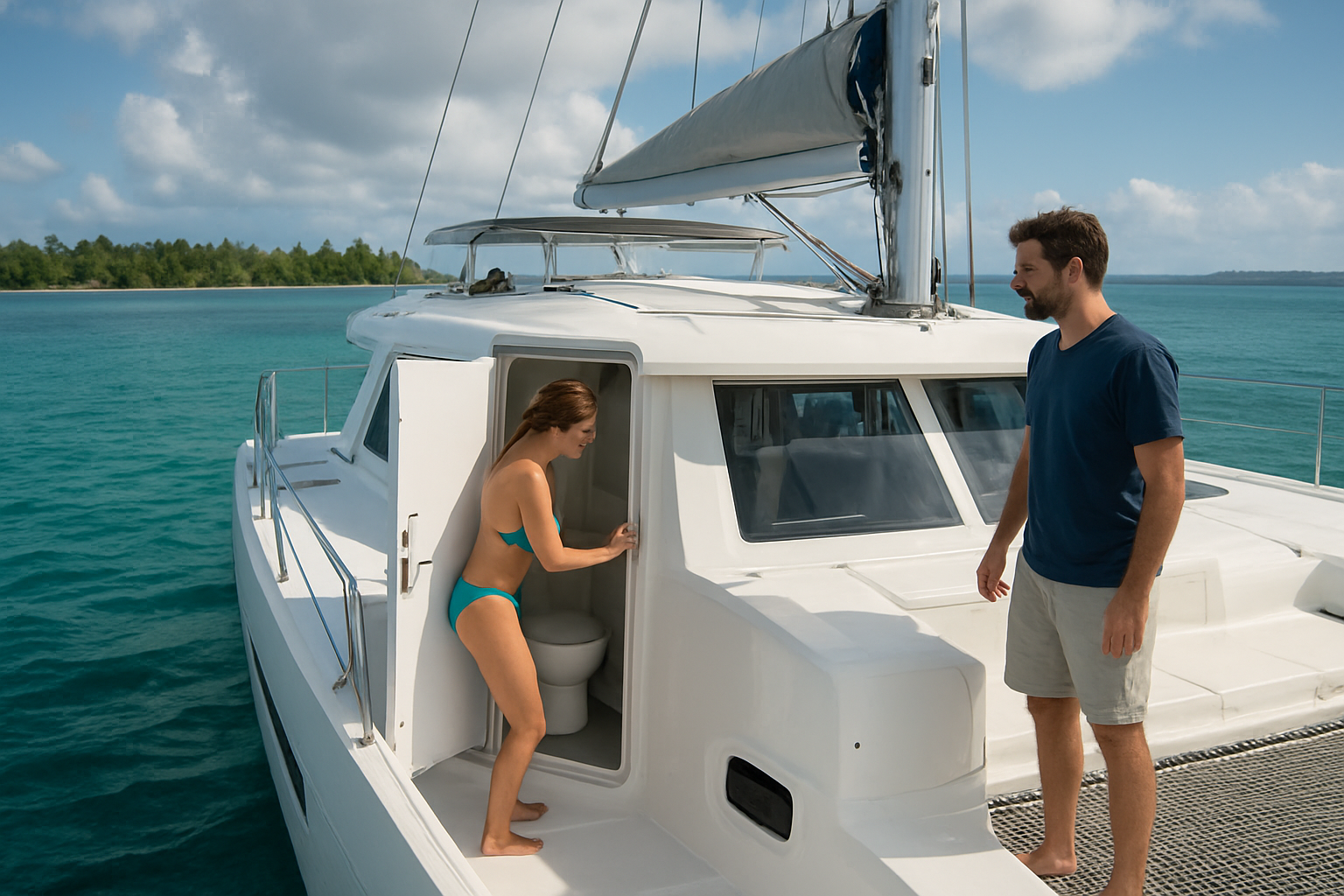
Meal planning connects to water and sanitation. Guests may also want to know how the restrooms work, how much freshwater is available and how the boat handles electricity. See San Blas catamaran bathrooms and life aboard.
Catamarans in the Panama fleet
For Pacific days from Panama City, the fleet lists nine catamarans: the 37ft Baja, 41ft CAT, 44ft Lagoon, 46ft Fountaine Pajot, 47ft Power Cat, 48ft Roger Cape, 54ft, 56ft Fontaine Pajot and 59ft. Each boards at Flamenco Marina on the Amador Causeway with a captain aboard, for groups of any size. San Blas trips on the Caribbean coast are planned separately; ask the team on the San Blas charters page.
Compare every boat and price on Panama yacht rentals. Related guides: What Life on a San Blas Catamaran Is Really Like, How Bathrooms Work on San Blas Catamarans and San Blas Yacht Charter Guide: Access, Boats and Planning. Boats to look at: 44ft Lagoon catamaran, 46ft Fountaine Pajot catamaran and 59ft catamaran.
Get the meal plan in writing
When reviewing San Blas yacht options, ask for the exact vessel, lawful route, included meal plan and all food-related charges. Clear expectations allow you to enjoy the surroundings instead of wondering what lunch will be.
FAQs
Is food included on every San Blas catamaran?
Can I bring my own snacks?
Can I request vegetarian or allergy-aware meals?
Is fresh seafood served every day?
Is drinking water included on a San Blas sailing charter?
What if someone in our group has a severe food allergy?
Will lobster or fresh seafood always be on the menu?
Ask the Panama team
Send the date, the route and the group size. WhatsApp the Panama team on +507 202-1729 (USA line +1 754-325-3827), in English or Spanish.
This guide is part of our san blas & catamarans guides. For every topic, from booking and pricing to routes and safety, see the full Panama Yacht Tips guide library.
 What Life on a San Blas Catamaran Is Really Like
 Can You Work Remotely From a San Blas Catamaran?
 How Bathrooms Work on San Blas Catamarans
 Do San Blas Catamarans Have Air Conditioning?
 Where Do You Sleep on a San Blas Catamaran?
 San Blas Yacht Charter Guide: Access, Boats and Planning
 Three-Day San Blas Catamaran Itinerary: Transfers, Cabins and Pace
 Do San Blas Catamarans Have WiFi?