
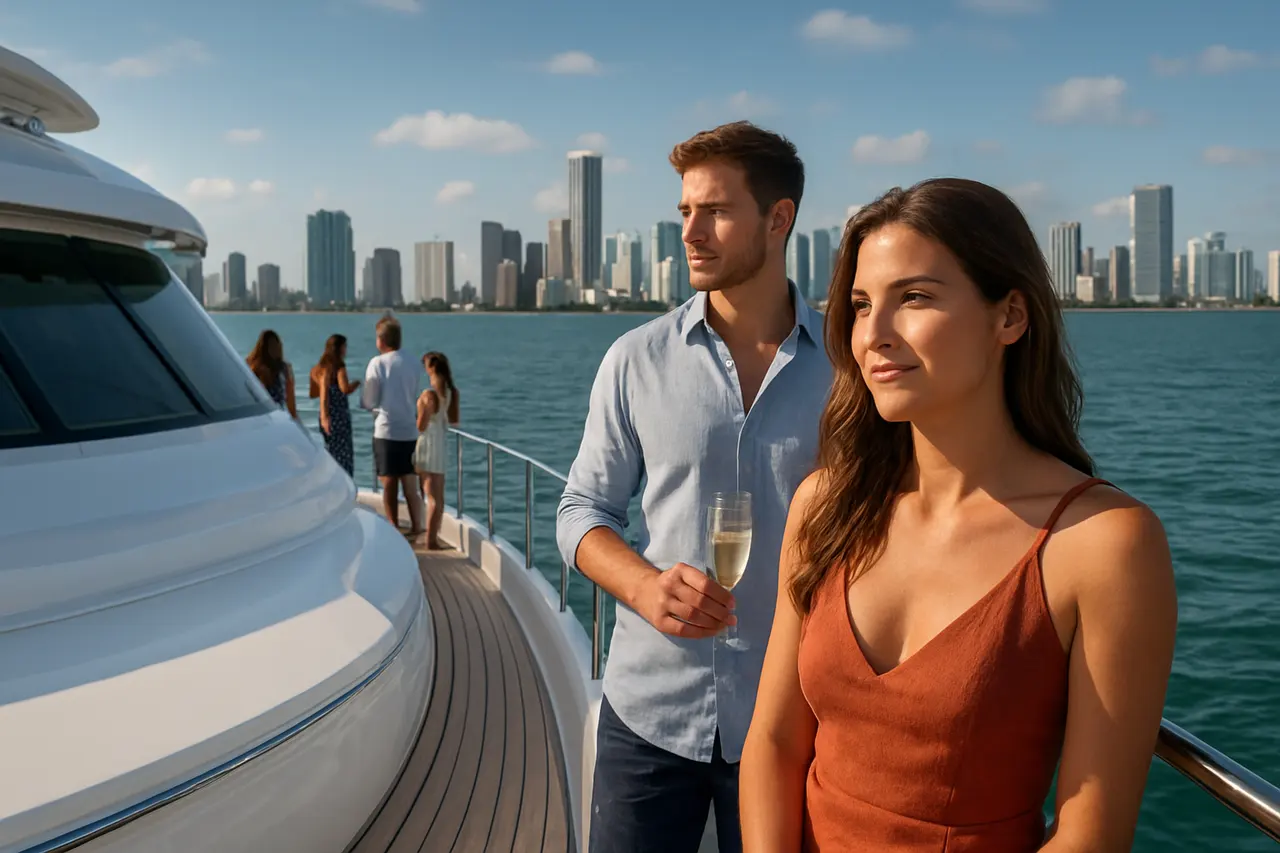
Event Yacht Seating vs. Passenger Capacity in Miami: Why Both Numbers Matter
A yacht advertised for eighteen people may be a poor match for a dinner with eighteen place settings. Passenger capacity tells you a legal or operational upper limit under a specific arrangement; seating tells you how your event will actually work. You must satisfy both. Getting the distinction right prevents the two most common event-planning disappointments: reserving a boat that cannot carry the guest list, or reserving one that carries everyone but cannot host the planned activity.
By Fernando Yemail · Founder of Feeling Yachty
A yacht advertised for eighteen people may be a poor match for a dinner with eighteen place settings. Passenger capacity tells you a legal or operational upper limit under a specific arrangement; seating tells you how your event will actually work. You must satisfy both. Getting the distinction right prevents the two most common event-planning disappointments: reserving a boat that cannot carry the guest list, or reserving one that carries everyone but cannot host the planned activity.
Passenger capacity: the ceiling, not the floor plan
The allowed passenger count depends on the vessel's actual charter arrangement, documentation, crew, route and conditions. In U.S. passenger-for-hire service, the Coast Guard distinguishes six-passenger uninspected operations, properly inspected small passenger vessels with a Certificate of Inspection and qualifying bareboat arrangements. Terms such as “up to 20 guests” need supporting details for the specific service being sold. A large upper deck or a long vessel does not establish legal authority.
Ask the provider for the charter-specific permitted guest count, not a number copied from an owner's private outing or broker inventory. Clarify whether staff, the charterer, vendors or children are included in the operator's count under the applicable rules. Because those distinctions vary by operating model, the operator should answer for that exact trip; do not apply a blanket head-count formula from a social post.
Seating capacity: the experience your group receives
Seating can mean five different things: sheltered lounge seats, a formal dining table, cockpit benches, bow cushions and flybridge seating. These places are not interchangeable. A group of fourteen might legally board and spread out comfortably for sightseeing, yet be unable to eat at one table. Even if there are enough total cushions, some may be exposed to wind, rain or uncomfortable movement.
For a dinner, distinguish simultaneous dining seats from all possible places to sit. For a presentation or corporate reception, count seats with usable sight lines and a safe sound level. For a family outing, confirm protected shade and seating that is suitable for young passengers. For a dance-focused birthday, a large open area may matter more than assigned seats—but the route and captain's instructions still determine where guests may safely gather.
Match the layout to four event formats
| Event | Layout to confirm | Common wrong assumption |
|---|---|---|
| Seated anniversary dinner | Dining table for the full group, stable service path and rain backup | Every lounge cushion is a dinner seat |
| Corporate presentation | Seats facing speaker, shade, noise control and power approval | Standing room equals functional conference capacity |
| Family reunion | Covered seats, restroom access, easy circulation, appropriate boarding | All generations are comfortable with exposed bow seating |
| Birthday with music | Approved social area, guest movement, food stations and speaker placement | A bigger boat always has more dance space |
The event format affects not only the vessel but also the schedule. Catering staff moving through a narrow salon cannot serve efficiently if luggage, decorations and guests occupy the same passage. A photographer may need an unobstructed aft deck; a musician may need electricity in a permitted location. A good floor plan keeps these activities from competing.
Ask for the exact boat's real layout
Request a recent walkthrough, preferably of the very boat you would book, and verify where guests sit when underway. Ask whether cushions shown in marketing photographs are removable or weather-dependent. Check the number of restrooms, railings and boarding steps. Confirm which decks are accessible to guests and whether upper areas have guest-count limits established by the operator.
If a provider offers several yachts of the same length, do not assume the interiors match. A fifty-foot sport yacht can feel completely different from a fifty-foot flybridge yacht or catamaran. A catamaran may offer a broad salon but still have an unsuitable formal dining table for your group. For a structured comparison, see how to choose a yacht for a Miami event.
The practical two-number booking request
Send a message containing both numbers: “We expect eleven paying guests and need eleven comfortable dining seats at the same time. Can the exact yacht legally take our group on this charter arrangement, and can you show the dining setup?” This forces clarity. Then add your marina, date, route, food plan and whether a member of the group needs help boarding.
If the operator can lawfully take fifteen but only seat eight for a meal, either reduce the group, switch to a cocktail format or choose another vessel. Do not try to solve inadequate seating by stretching the charter's permitted capacity. The two questions are separate.
Fernando's practical tip
I like to ask for a short video that shows the entire social area in one continuous walkthrough. It is easier to see how people will move, sit and get to the restroom than from isolated luxury photographs.
Frequently asked questions
Is a yacht's maximum guest capacity the same as its dining capacity?
No. A permitted passenger limit and practical simultaneous dining-seat count are different measures.
Can we add chairs to increase dining capacity?
Only if the operator approves their placement and safe use. Adding chairs does not change the lawful passenger limit.
Can children sit anywhere on the yacht?
No. The captain's instructions, vessel layout, age and conditions govern safe locations and appropriate life-jacket use.
Is a Certificate of Inspection needed for every yacht party?
No. Requirements depend on the operating model. Confirm whether the service is an inspected passenger vessel, an uninspected operation or a lawful bareboat arrangement.
Continue with the Miami group-size guide, seated yacht dinner planning or Miami private yacht rentals.
Regulatory source: USCG Charter Boat Captain credential categories. This page is planning guidance rather than a vessel-specific capacity certificate.
This guide is part of our safety & regulations guides. For every topic, from booking and pricing to routes and safety, see the full Miami Yacht Tips guide library.
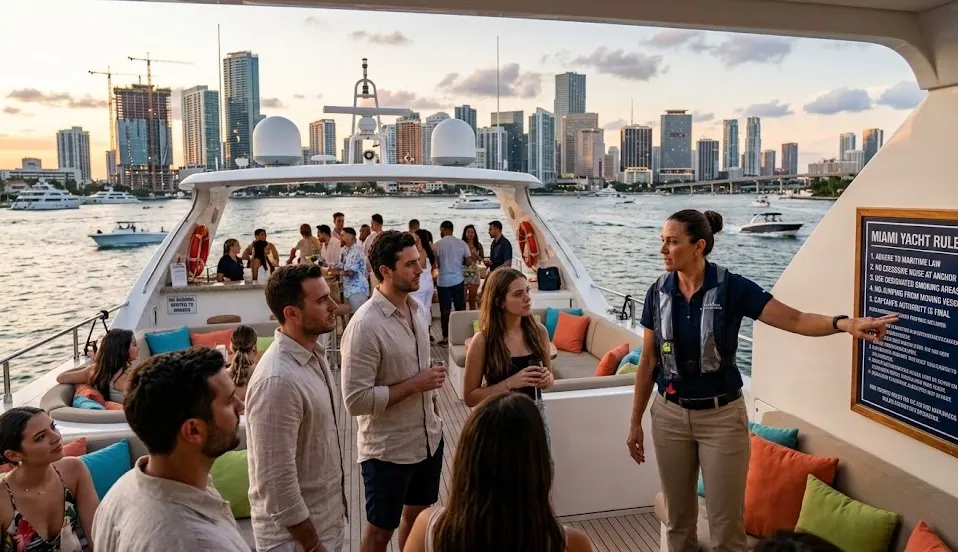 Yacht Party Rules and Regulations in Miami
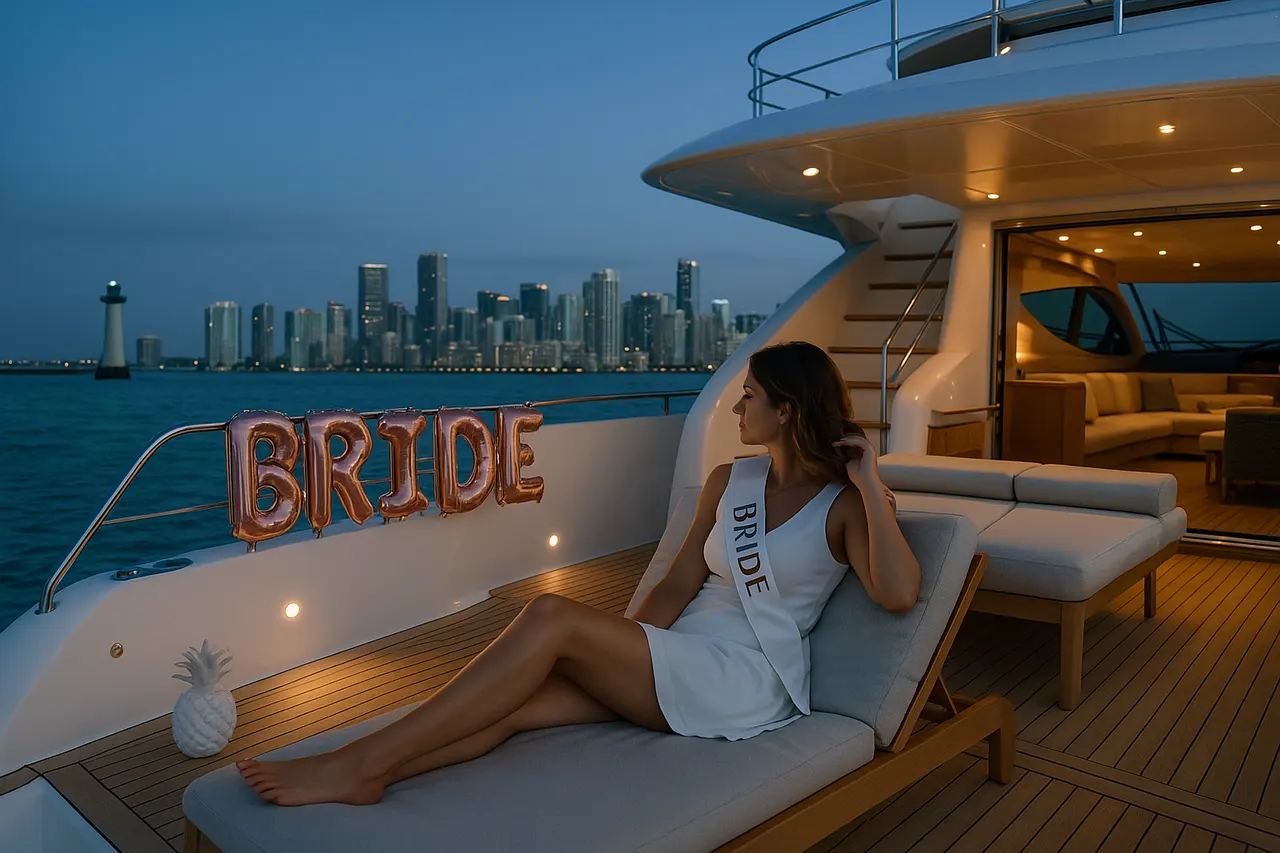 Miami Bachelorette Yacht Decor: Themes, Rules & Setup Tips
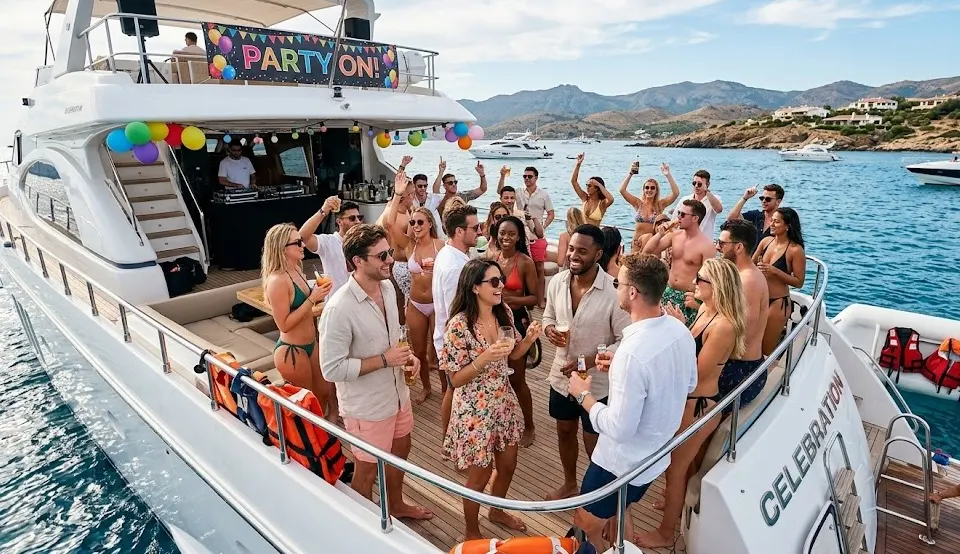 How Many People Can Fit on a Party Yacht in Miami?
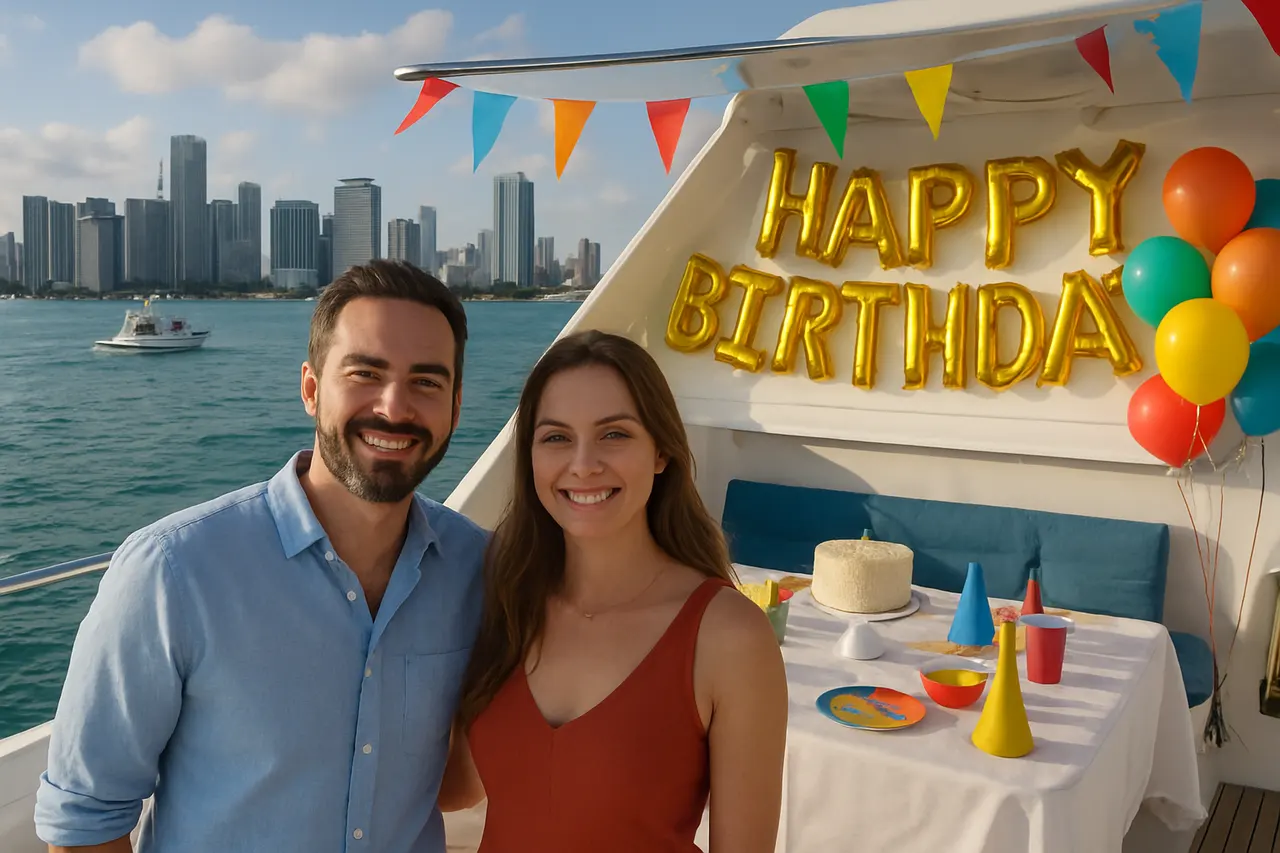 Miami Birthday Yacht Decorations: Ideas & Setup Rules
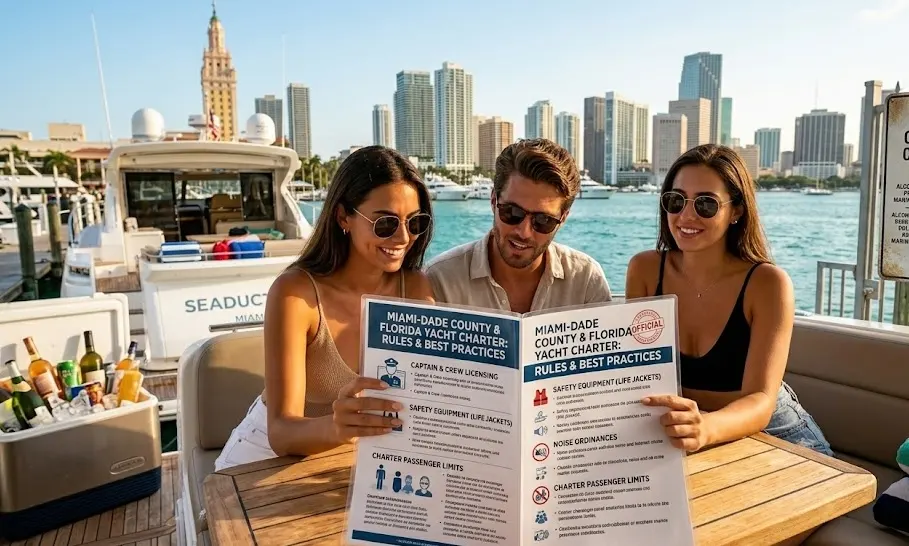 Yacht Charter Rules You Need to Know in MiamiMiami Yacht Charter Safety: What Guests Should Know
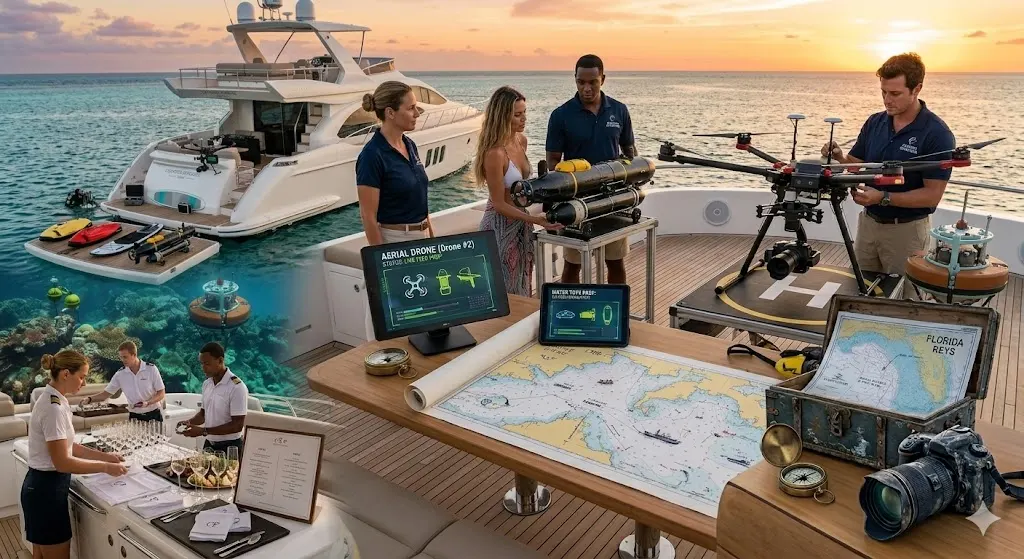 Crewed vs Bareboat Yacht Charter in Miami
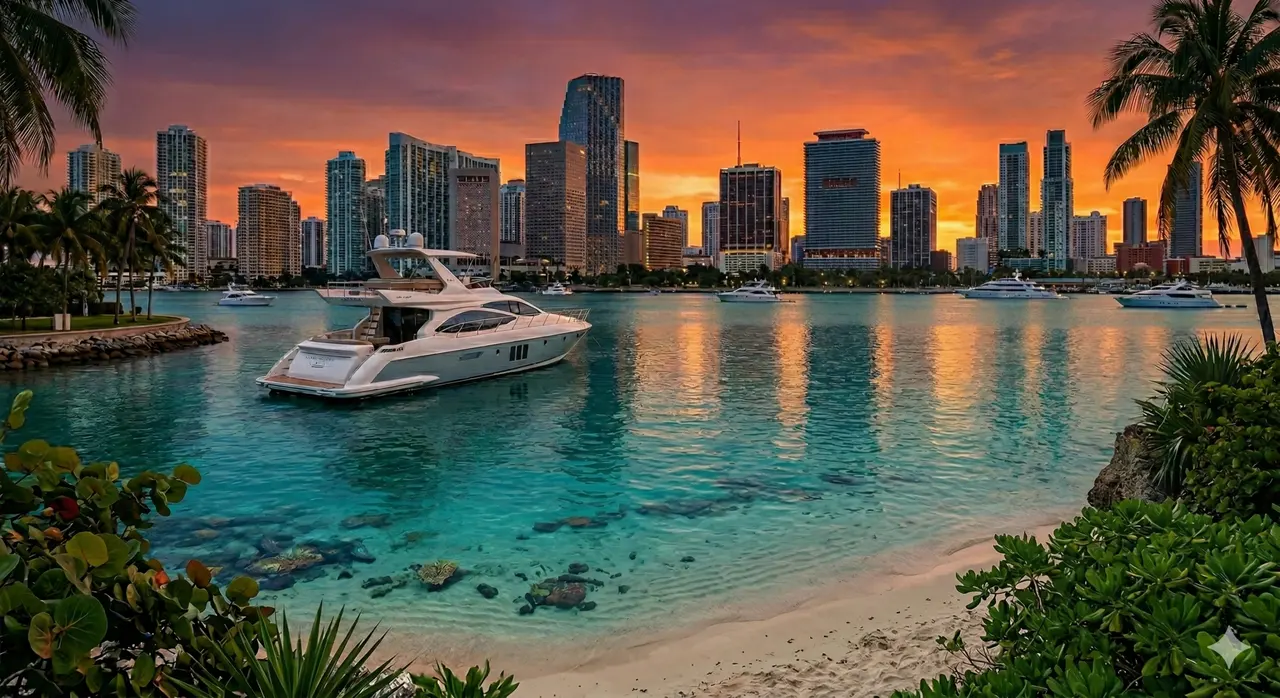 Do You Need a License to Charter a Yacht in Miami? Guest, Captain and Operator Rules